Wednesday, September 3, 2014

Celebrating 35 years of making beautiful tiles!!

It's hard to believe, but it's true what they say....time flies when you love what you do!! I'm creating a commemorative tile to celebrate our 35 years in business, and I'm using the very first tile I ever carved for the brand new DBA - L'esperance Tile Works, in September of 1979. Here's the process.

My Daylily Tile 4x4 was the first decorative that I carved after the DBA for L'esperance Tile Works was filed, in downtown Troy, NY.

I had the mould pressed into a large slab of clay, and cleaned up the edges. I decided to make the 4x4 into a larger sized tile with lettering and a decorative swirled background.

I created lettering in photoshop and laid the image over the wet clay tile. Then I traced the lettering onto the clay with a ball point pen.

I created a border around the tile for ease in pressing the mould.


Here's the wet clay with the lettering and border images slightly impressed from the pen.

I'm adding a decorative swirl in the background of the commemorative tile.

Here's the finished added additions to the wet clay. I poured a plaster mould on top of this tile, and notated that it is the original carving on the back of the tile....recorded for posterity!

Here's the tile cut around the border and drying.

This tile will be bisqued in the next few days and glazed in a light blue crackle. Then I'll start pressing a limited number of tiles. I'll hand number 1 - 35 on the back of the first 35 pieces, creating a limited edition. I'll also add a gold luster border to make them even more special. Each of my family members will get one, along with a number of very special friends and highly valued customers who have followed us through the years. I'll also save one for a give-away....so stay tuned for the details before the end of September!

You can find my tiles for sale on etsy here - lesperancetile.etsy.com
You can find my other social networking links here -
https://www.facebook.com/lesperancetile
https://twitter.com/lesperancetile
http://instagram.com/lellett

Labels: , , , , , ,

Sunday, March 25, 2012

No. Nine - Victorian fireplace tile reproduction...glazing a mottled tile

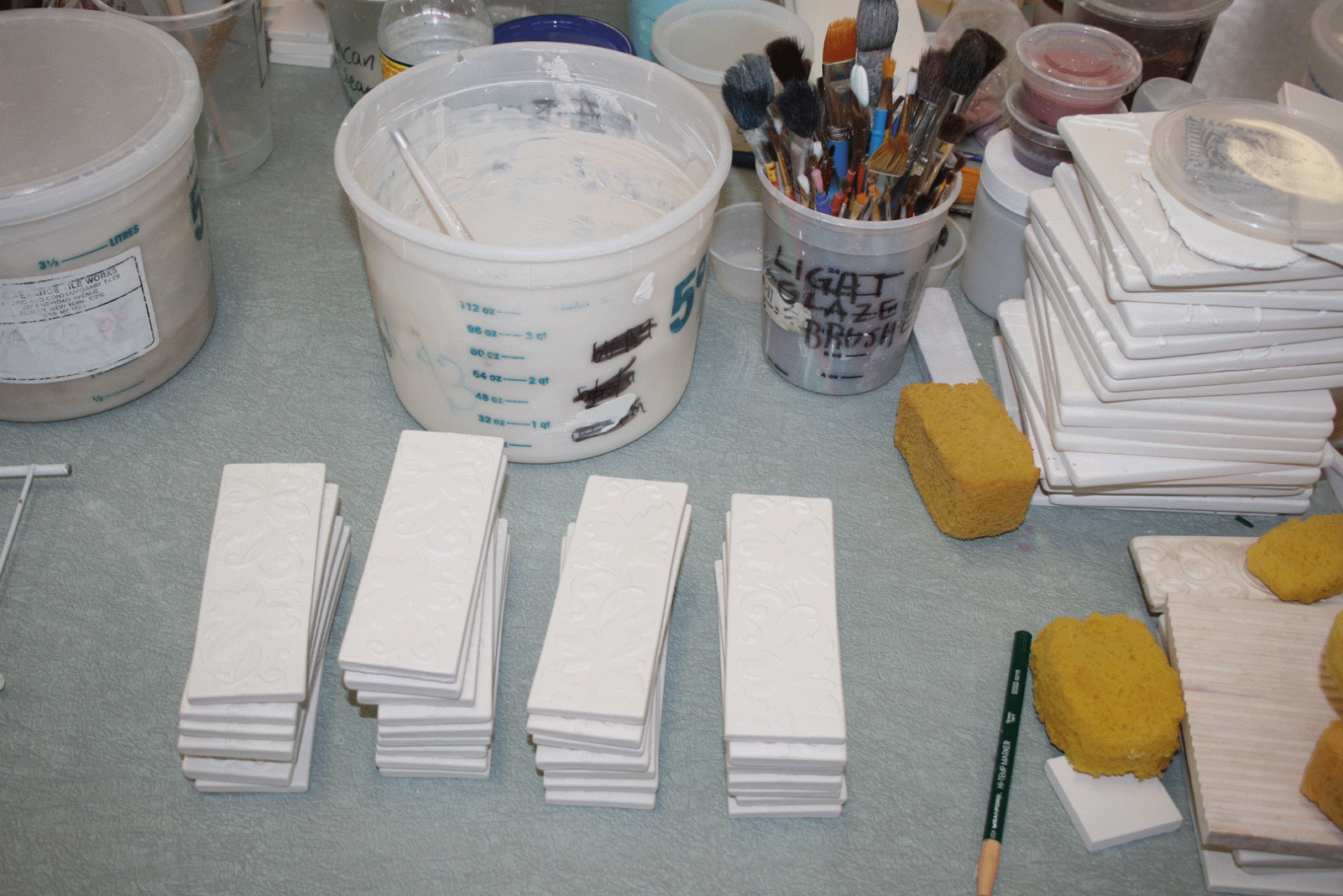
The set of tiles that I was tasked with reproducing are glazed in what was called "mottled" or "sponged" glazing. It was a very popular type of glazing for both the field tile and the decorative banding, although I think it tends to obscure the details in the decorative tiles too much.
The decorative tiles on my glaze table. The first step is to figure out what the base glaze is, and how thickly it should be applied to allow the other colors flow into it. These tiles have a slightly yellow base on them.

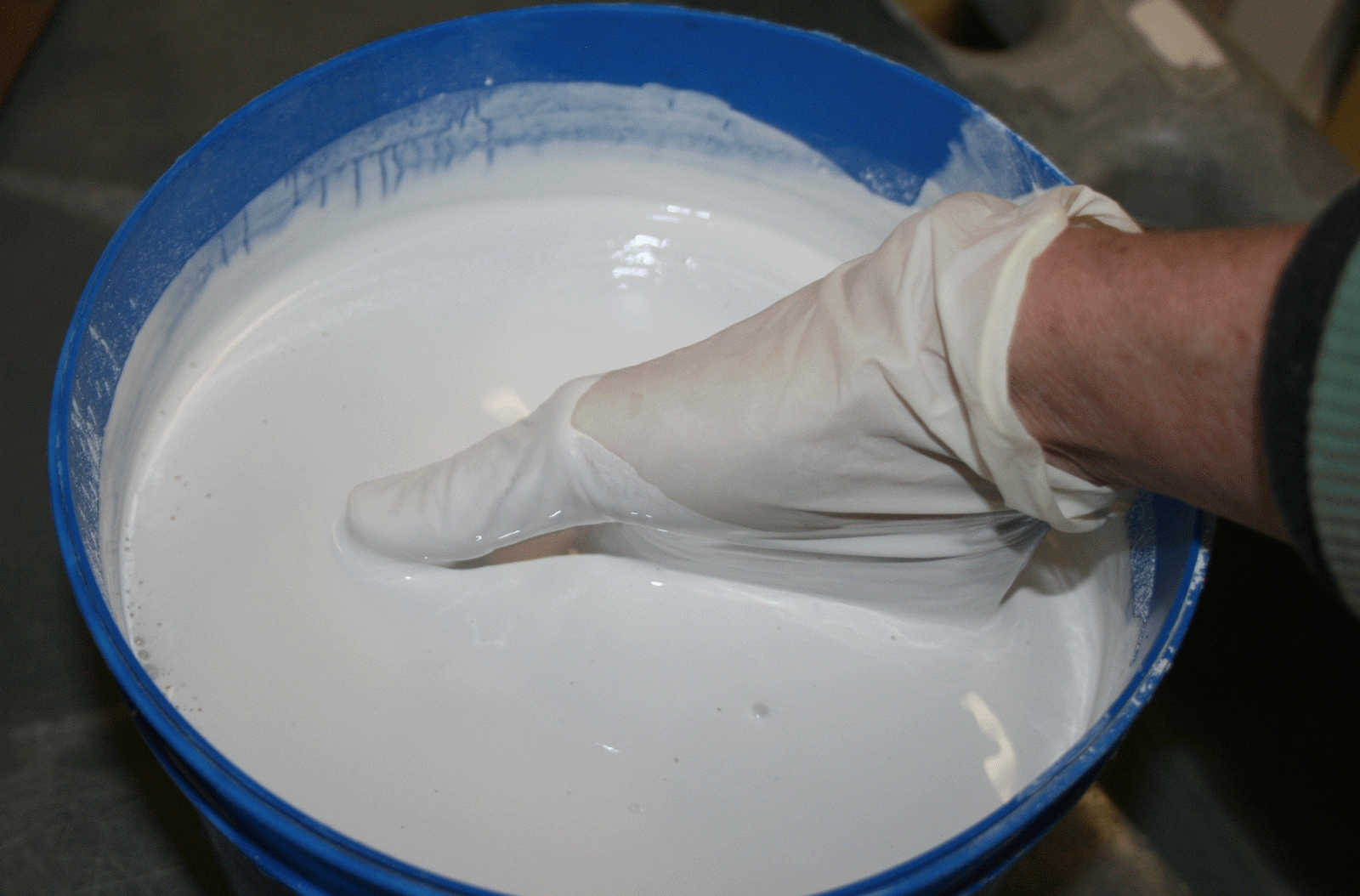
I brush the base glaze onto the tile.

A thick even coat dries quickly and is ready for the next step.

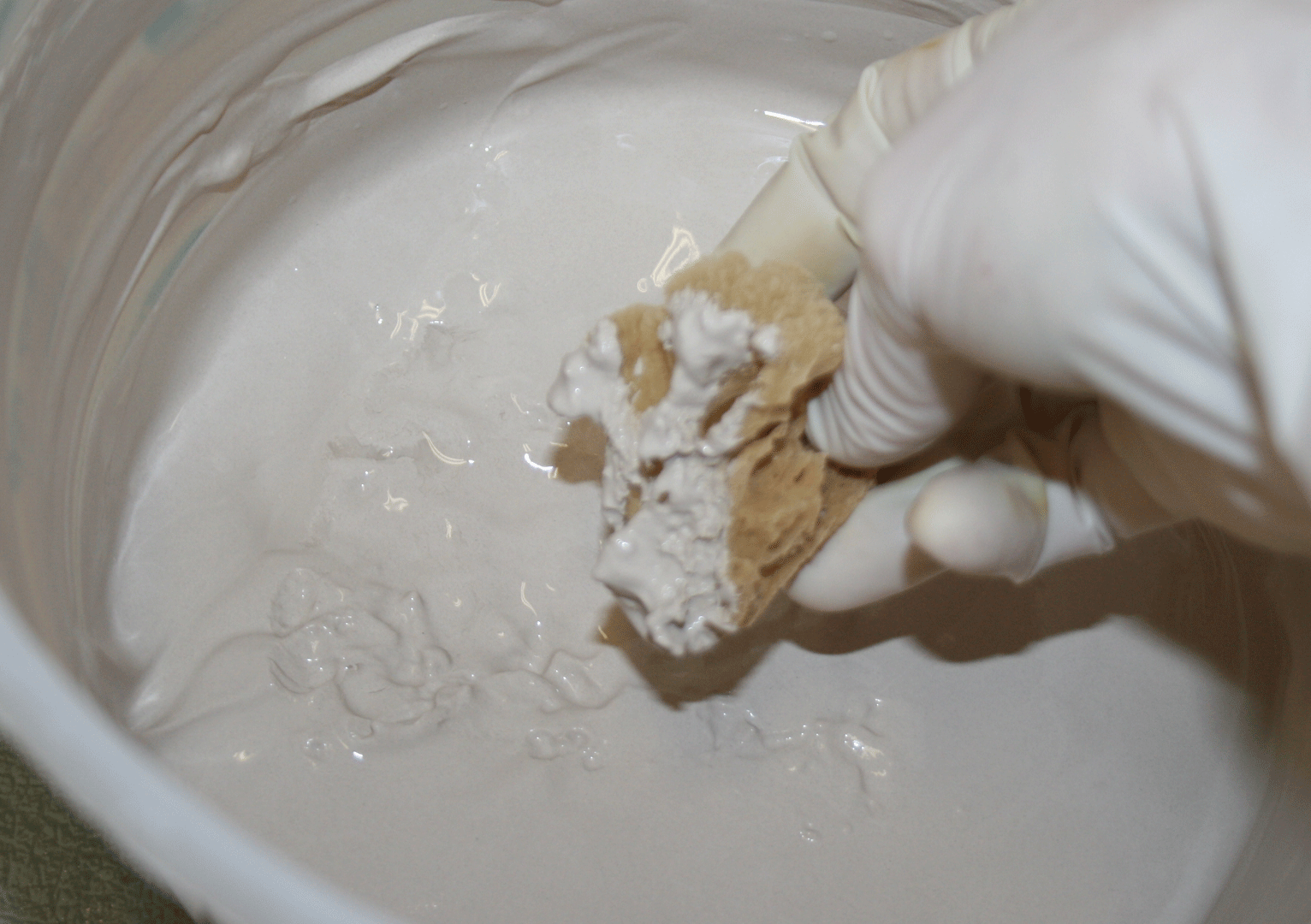
I use a small natural sponge to apply the contrasting color, hence the name for this style of glazing - "sponged tiles"!

The sponge actually creates the pattern that will remain visible even after the glaze firing has melted the two glazes into each other.

Here are the coordinating field tile that will fill in the remaining area of the fireplace hearth. They get the same glaze treatment of hand painted base glaze with sponged glaze details on top.

The top tile is the original piece, uncleaned with dirt and debris. The center tile is my reproduction. The bottom partial tile is an original tile that I cleaned and re-fired to a very low temperature to remove the cement and varnish. It lightened up the glaze slightly, and the client decided to have me match that glaze rather than the more yellow one with darker maroon details.

I was very happy with the finished tile and it got a thumbs up from the customer, so all's well so far! They have just ordered more field tile to add to the interior firebox, which I'm hoping will ship this week. As soon as I get photos of the finished fireplace I'll post them.

I hope you've enjoyed my series on reproducing a Victorian tile, and please let me know if you have any questions about the techniques that aren't clear enough.

Happy Tiling!!

Labels: , , , , ,

Monday, March 19, 2012

Reproducing a Victorian style Tile - No. Eight

Time to finish up this blog series with this post on pressing and the next on glazing. Since the tiles haven't actually been set yet by the homeowner, I can't show you the finished fireplaces. But as soon as I get them I'll share...promise!

Our funky, but very cool and productive, hand press. We start by laying a slab of clay on top of brown paper.

The plaster mould is placed on top of the clay, with the design face down. My production assistant, Trish, is doing all the work here....I've never had finger nails that long.

We use a stiff plastic cutout on top of the mould to help distribute the pressure. The sound of a plaster mould cracking is just a terrible sound.

The mould is centered under the press box.

The press is pulled down until it reaches a stop bar that has been set to create a tile the thickness we want.

Excess clay is cut from around the plaster mould.

The knife is drawn through the clay but chopped down at the end to prevent "dogears" at the corners.

Stamping the back of the tile.

The plaster releases the clay easily from the mould. We lay the tiles on plaster boards that are part of our production shop.

The tiles need to dry up before the excess is cut from around the pattern.

We use drywall tools as tile cutters. They are generally well made and are sharp enough to cut right through the clay.

After the edges are cut off the tiles are left to dry for a few days. Then we sponge the edges slightly to soften the cut just a bit.

The tiles are fired in a bisque kiln along with the field tile, and then are ready to go to the glazing room for the glaze party! Check back soon for that post!

Labels: , , , , , ,

Tuesday, March 6, 2012

My Tile reproduction....Part 7

How do I make my plaster moulds? Honestly.....not with a lot of enthusiasm.

Plaster is not my favorite material to work with....in fact plaster and I don't really enjoy each other very much. If I can, I let someone else make my moulds for me, but that's usually for large production runs. If I only need a few tiles for custom orders, then I just suck it up, get the apron and gloves on, and mix it up.
I set my wax on a thick pane of glass, which gives me a level surface to pour the plaster on.

I brush a thin coat of vegetable oil onto the wax to help the plaster separate from it.

I use plastic slats to create the frame that the plaster will be poured into. I seal the edges with soft clay.

Mixing the plaster. I use the intuitive method of mixing the plaster into the water - add the dry plaster to the water until it makes dry islands just above the level of the water. Then I let it slake for a few minutes and stir for 8-10, while impatiently waiting for the perfect moment to pour.

I overfill the frame and let the plaster stiffen while I clean up the mixing bucket and messy spills.

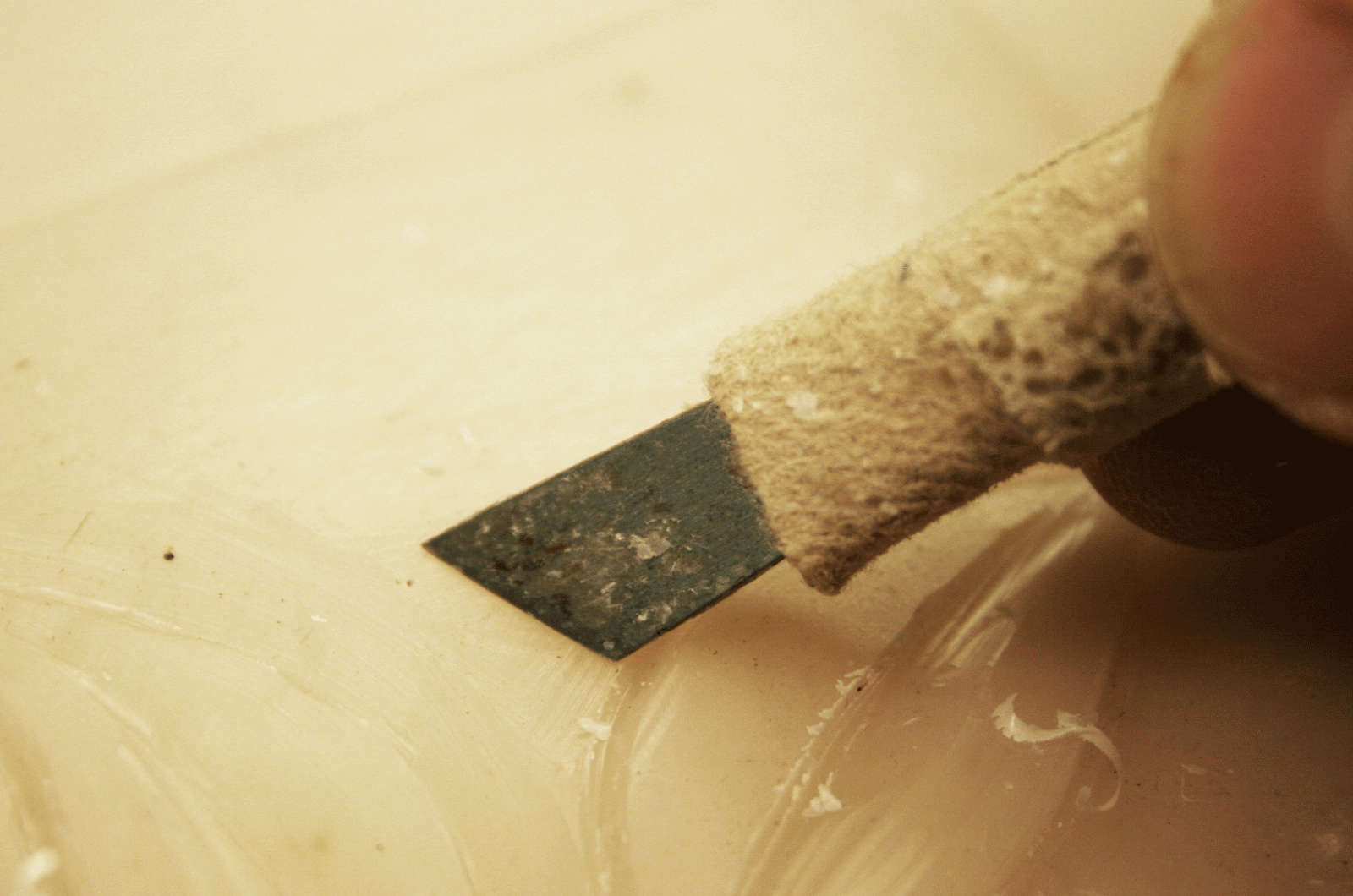
When the plaster just begins to harden I use another plastic slat to level the it to the top edge. This ensures a consistent thickness and level to the mould.

Surface and edges are clean and now I just have to wait for the plaster to finish setting up. I take care not to go far because I've found that the plaster can get hot enough to warp the wax. I release it when it's hot to the touch.

A lovely sight is a just released plaster that has NO bubbles and every detail is in perfect form. This one turned out great.

Now that I have a working mould, I'll let it dry for a day or two and then...onto pressing the tiles!

Labels: , , , , , , ,

Sunday, March 4, 2012

Part Six of my series on Reproducing a Victorian Tile

Here we are at part six of a ten part series on reproducing a Victorian tile, and I have to admit this is the best part as far as I'm concerned. I'm now ready to work on the shape, texture and details of the tile.
Using the original tile as a guide I begin to shape the details and depth of the pattern.
I keep the original tile close at hand and reference it often to stay as true as possible to the flow of the pattern.
I use one of my small round tipped tools to soften the edges of the leaves.
I use the flat edged tools to level the background and smooth away any lines created from my first tracing.
The large rounded tools help me create the sculpted petals and leaves. I also use them to smooth edges.

The larger flat edged tools are used to finish the background areas of the wax.
Here's the finished wax. One detail I forgot to photograph, which stands out in this photo is how I fix or touch up areas that I want to change after carving. I use one of my small scoop shaped tools that has some wax in it, and heat it over a small candle flame. Then I lay the metal on top of the part I need to re-carve and let the hot wax melt onto the surface. The black areas of the wax show where the carbon from the edge of the scoop tool filled in with hot wax. I then let the wax cool for a few minutes and re-carve the details.

Next I'll show the pouring of the plaster mould.

Labels: , , , , , ,

Monday, November 7, 2011

Reproducing a fireplace tile - part 2 - formatting the image

As I walk you through the process of reproducing a Victorian tile, I'll try not to leave any of the steps out - which I'm finding is actually hard for me since I zip through the first steps without much thought!

Scanning the tiles.
After cleaning the tile to see the details, I scan the tile to Photoshop, where I need to  increase the size of the image by the amount that the clay will shrink after glaze firing. Our clay body shrinks 10%, so that's what I increase the image by. Then I print the image out to use as a starting guide for my wax carving.
Scanned image increased in size by 10%.
I've also cut and pasted the image at the bottom as a guide for making corners. Since the clients didn't have any corners in their original fireplace set, and I can't find an image of the original tiles anywhere, I'll be designing them myself. It always adds a nice detail to have the design wrap the edges.

At the carving table with image and original tiles.

At this point I get to head over to my carving area - my most creative and challenging spot in the whole building. As I look at the photo and the original tile, my brain begins to tell my hand how to carve it......no, not that way, this way....watch out, not too deep, make it a smoother line....

Wow, I'm glad that internal dialogue doesn't really exist!


The 10% shrinkage that I'm compensating for.

So now that the formatting is all done.....I need a nice clean piece of wax to carve the design into. Join me tomorrow when we visit with Madame Tussaud and get the secrets of making great wax!

Labels: , , , , , ,